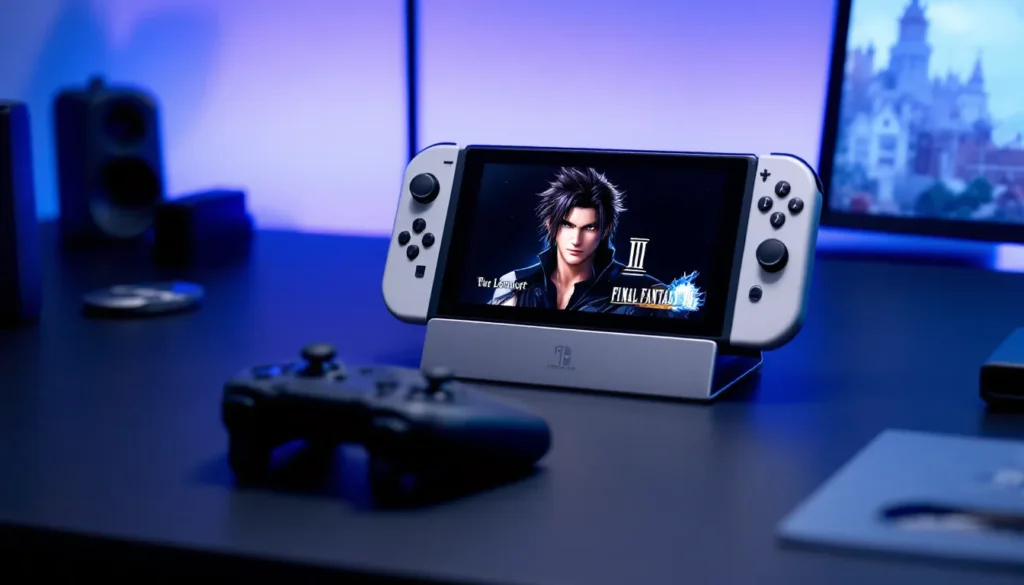
Final Fantasy VIII landed on Nintendo Switch in 2019, and it’s still turning heads in 2026. If you’ve never experienced Squall Leonhart’s journey or you’re thinking about revisiting Balamb Garden on a portable platform, now’s the time. The Switch version brings this PlayStation classic to your handheld with all the signature systems intact, Junctions, Guardian Forces, and that unforgettable Triple Triad card game. Whether you’re a series veteran or jumping in cold, FF8’s Switch port delivers the full experience without requiring a time machine.
Table of Contents
ToggleKey Takeaways
- Final Fantasy VIII on Switch delivers the complete 2013 PC port optimized for handheld play, featuring all core systems like the Junction system, Guardian Forces, and Triple Triad intact at a $19.99 price point.
- The Junction System is FF8’s defining mechanic that lets you customize character stats by attaching magic to different stat slots, making early grinding for magic stocks and HP prioritization essential for success.
- Battle Speed controls and quality-of-life improvements like toggling enemy encounters make grinding and long play sessions more manageable on Switch than the original PS1 version.
- At $0.40 per hour of entertainment for 50+ hours of content, Final Fantasy VIII on Switch offers exceptional value compared to modern AAA games and is ideal for portable gaming.
- The Switch port runs stably at 30 FPS with fast load times in both handheld and docked modes, with handheld mode’s convenience typically winning out over docked mode’s visual presence for long playthroughs.
What Is Final Fantasy VIII And Why It Matters To Switch Players
Final Fantasy VIII is the eighth mainline entry in the Final Fantasy series, released originally on PlayStation in 1999. It’s not your typical hero-saves-the-world narrative, Squall is a mercenary-in-training at Balamb Garden military academy, and the story spans a complex timeline involving multiple protagonists and reality-bending plot twists that still spark debate among fans.
What made FF8 revolutionary wasn’t just its story. The Junction System let players completely customize character stats by attaching Guardian Forces and magic to different stat slots. This meant two players could build Squall completely differently and get wildly different results. The game also introduced Limit Breaks that required button-press timing, making combat feel more active than typical turn-based RPGs at the time.
For Switch players specifically, FF8 matters because it represents an era when Final Fantasy took risks. While FF7 gets all the remake attention, FF8 remains the scrappier, more experimental sibling with devoted fans. The Switch port gave a whole new generation of portable gamers access to 30+ hours of story, and unlike its console predecessors, you can now play it anywhere. The game’s themes about identity, love, and sacrifice still hold up, even if the draw system makes some players want to throw their controllers.
How Final Fantasy VIII Performs On Nintendo Switch Hardware
Graphics And Visual Quality Expectations
The Switch version is a straight port of the 2013 PC remaster, not a ground-up rebuild. You’re not getting HD remasters or graphical overhauls, you’re getting what the PC version delivered, scaled to fit a smaller screen. The character models use pre-rendered backgrounds, which means they can look a bit dated when you’re docked on a TV, but honestly, the art direction holds up surprisingly well. The menus are crisp, text is readable even in handheld mode, and the colored UI doesn’t cause eye strain.
One thing to know: enemy models and summon animations are where the visuals shine. Guardian Force summons like Ifrit and Diabolos still look impressive, with fluid animations that pop even on the Switch’s modest GPU. The real-time battle sequences maintain solid visual clarity, though you won’t see the level of detail you’d get on a PS5 or high-end gaming PC.
Screenshots don’t tell the whole story, the game’s aesthetic works because it leans into its late-90s style. Japanese anime cutscenes, character designs, and atmospheric environments feel cohesive. Docked mode runs at 1080p (undocked at 720p), so the scaling is smooth in both scenarios.
Frame Rate, Load Times, And Performance Optimization
Frame rate is stable at 30 FPS in both handheld and docked modes. That’s the target the port was optimized for, and it holds up during normal gameplay. You won’t experience major dips during exploration, menu navigation, or even combat sequences. The trade-off is obvious, it’s not the buttery 60 FPS of a modern action game, but for a turn-based RPG, 30 FPS is industry standard and feels responsive enough.
Load times are the real winner here. The Switch version uses fast cartridge loading, which means transitions between areas, menus, and battles are snappy. You’re looking at 2-4 second loads in most cases. Compare that to the original PS1 version with its disc-based load screens, and the Switch port feels genuinely modern. This is especially noticeable when you’re grinding or running through repeated areas.
The game was optimized specifically for Switch’s hardware constraints. The developers compressed assets intelligently without cutting features. That means you get the full draw/junction system, all Guardian Forces, and every side quest intact. There are no “Switch-exclusive nerfs” or missing content, which is rare for older game ports.
Key Features And Gameplay Enhancements For The Switch Version
Quality-Of-Life Improvements And New Additions
The Switch version carries over QoL features introduced in the 2013 PC port and expands them. The most important one is the Battle Speed Fast option, which you can toggle from the main menu. This cuts down on animation delays during combat, making grinding and random encounters much less tedious. You can also toggle the Enemy Encounters on and off, letting you walk through areas encounter-free if you want to focus on story or exploration.
There’s also a Magic Booster function that lets you increase your magic pool automatically, which helps newer players avoid the pitfall of magically depleting themselves by actually casting spells. This was a learning curve in the original, using magic reduces your stock, so min-maxers would hoard spells and never cast them. The booster removes that penalty.
Automatic equip functions make managing equipment less tedious, and the UI has been optimized for controller input. Menus respond immediately to inputs, and navigation is intuitive. The dialogue and story text are all fully available, including the English localization that’s been remastered with cleaner fonts for the smaller screen.
One minor note: the game doesn’t include new content created specifically for Switch. This isn’t FFVIII Remake, it’s the definitive version of the original game on a portable platform.
Battle Speed Controls And Accessibility Options
The Battle Speed adjustment is critical for long play sessions. You can set it to slow (default), normal, fast, or fastest. The fastest setting almost cuts battle animations in half, which is perfect if you’re replaying the game or grinding for items and GFs. This option fundamentally changes how the game feels, Fast mode is arguably how the game should have shipped originally.
Accessibility extends to the ATB (Active Time Battle) speed. Unlike some other Switch ports, FF8 doesn’t force a single animation speed. You control the pacing, which matters when you’re playing for hours on a handheld and eye fatigue becomes real.
Button remapping is available, letting you customize controller layout for comfort. There’s no motion control or HD rumble features (not needed for a turn-based RPG), but the baseline accessibility is solid. The game includes subtitle options and supports various language settings across the Switch library.
Getting Started: Tips And Tricks For New And Returning Players
Essential Early-Game Strategies And Guardian Force Selection
Your first major decision is which Guardian Force to obtain first. The game offers Quezacotl (lightning-based) and Shiva (ice-based) early on. Most veterans recommend grinding for Quezacotl immediately because its Thunder magic helps against early enemies. But, Shiva is also solid, the choice comes down to playstyle.
Here’s the core strategy: Don’t use magic on enemies. Draw magic from bosses instead, even if it feels counterintuitive. Drawing stock keeps your magic pool strong for junctions. Early game, focus on drawing, junction-ing better spells, and using Guardian Force summons for damage instead of casting spells manually. This playstyle breaks the game’s difficulty curve in your favor.
Squall’s Weapon upgrade system requires specific items dropped by enemies. Timber Maniacs magazine locations are scattered throughout the world and affect which weapon upgrades become available. Don’t stress about “optimal” builds early on, just keep your weapon upgraded as you progress.
Grinding Guardian Forces takes time. You need enemies to spawn repeatedly, and you need Squall and Zell in your active party (not Rinoa) because they have better weapon progression early on. Spend the first 2-3 hours in the starting field area on the Balamb plateau, it’s tedious, but your party will be significantly stronger.
Junction System Fundamentals And Stat Optimization
The Junction System is FF8’s core mechanic, and it’s more flexible than it initially appears. Here’s the foundation: Each character can have one Guardian Force active at a time, and that GF provides stat bonuses plus magical junctions. When you attach magic (drawn from enemies) to a stat slot, it boosts that stat based on the magic’s power and quantity.
Example: Junctioning 100 copies of Firaga to your HP slot increases your HP pool significantly. More magic stock = bigger stat bonus. This means grinding magic quantities is worth it, because 100 Firaga > 10 Firaga in terms of stat gains.
Optimal junction strategy:
- Boost HP first. Get at least 2000 HP by mid-game.
- Then focus on Strength (STR) for physical damage.
- Speed (SPD) is criminally underrated. More speed means more turns: junctioning Speed magic lets you act before bosses.
- Avoid wasting powerful magic on elemental resistances unless you’re pre-planning for specific boss fights.
Swap Guardian Forces based on your needs. Different GFs provide different stat bonuses and ability unlocks. Irvine benefits from Strength-focused junctions because his shots deal direct damage. Quistis needs Mag (Magic attack) and Speed to maximize her Limit Breaks.
The magic economy is real: Drawing the same spell multiple times from an enemy gives you more stock of that spell. Farm your junctions early, and the back half of the game becomes much smoother. Don’t be afraid to spend 10 minutes in an encounter grinding magic pools, it’s actually faster than struggling through boss fights with weak stats.
Portable Gaming Experience: Handheld Vs. Docked Mode
Final Fantasy VIII is designed for you to sink 40+ hours into it, and the Switch’s handheld capability means you can spread those hours across your commute, lunch breaks, and lazy Sunday afternoons. In handheld mode (at 720p), the game remains perfectly playable. Text is readable, menus are responsive, and the 6-inch screen shows enough detail to appreciate the pre-rendered backgrounds without squinting.
The real difference is how the game feels. Docked mode on a TV gives you the full cinematic experience, story scenes hit harder, summons look more impressive, and those anime cutscenes have proper gravitas. Handheld mode trades visual presence for convenience. You lose screen real estate, but you gain the ability to play FF8 while lying in bed or on a long flight.
Here’s what actually matters: Load times barely change between modes. 30 FPS is 30 FPS whether you’re docked or not. The performance delta is negligible. Your choice should come down to whether you care more about visual impact (docked) or flexibility (handheld). If you’re planning a long playthrough, you’ll probably spend 70% of your time in handheld mode anyway, the convenience of playing anywhere typically wins out over the visual upgrade.
One practical note: the Switch’s battery life while playing FF8 is about 4-5 hours depending on your model. If you’re planning a gaming marathon, bring a USB-C charger or external battery. The game doesn’t demand frame-rate headroom like action games do, so it’s relatively battery-efficient compared to something like The Legend of Zelda: Tears of the Kingdom.
Joy-Con comfort matters for long sessions. Some players report minor hand fatigue after 3+ hours, especially if you’re holding the Switch without a stand. A Pro Controller solves this if you’re docking, but handheld players might want a comfort grip or kickstand upgrade.
Price, Where To Buy, And Value Proposition In 2026
Final Fantasy VIII on Switch launched at $19.99 USD and maintains that price point across major retailers in 2026. It’s one of the most affordable Final Fantasy experiences available, especially considering the scope of the game. You’re getting 30+ hours of story, plus extensive side content like Triple Triad tournaments, hidden Guardian Forces, and side quests that easily push playtime to 50+ hours if you’re thorough.
You can purchase it digitally through the Nintendo eShop on any Switch console, or grab physical cartridges from retailers like Best Buy, Target, and Amazon. Physical copies occasionally go on sale, but digital versions rarely drop in price, Nintendo’s eShop pricing is notoriously stable. Check Nintendo Life for any current eShop sales, though don’t expect massive discounts on first-party or older ports.
Price comparison to other platforms: The PC version on Steam is similarly priced at $19.99. PlayStation versions run $14.99-$19.99 depending on the system. The Switch version’s $19.99 is fair considering portability. If you already own FF8 on another platform, the Switch port isn’t a mandatory repurchase, but if you don’t own it yet and you care about portable gaming, the Switch version is the ideal entry point.
Value proposition breaks down like this: $19.99 for 50+ hours of quality JRPG content equals roughly $0.40 per hour of entertainment. Compare that to a $70 AAA game offering 15-20 hours ($3.50-$4.66 per hour), and FF8 is objectively better value. Factor in the portability and replayability (the game supports New Game+), and it’s genuinely hard to beat.
Bundle deals: FF8 occasionally appears in Nintendo Switch holiday bundles or sales events, but these are rare. Keep an eye on dedicated gaming retailers for physical cartridge discounts during holiday seasons. The digital price stays locked, so if you’re price-sensitive, physical might save you $5-10 over time.
Conclusion
Final Fantasy VIII on Nintendo Switch is a landmark port that proves older games can shine on modern hardware when ported thoughtfully. It’s not a remake or remaster, it’s the 2013 PC version optimized for handheld play, and that’s exactly what makes it work. The 30 FPS frame rate is stable, load times are quick, and the QoL features make grinding and long sessions feel less tedious than the PS1 original.
For newcomers: You’re getting an entry point to one of Final Fantasy’s most divisive, most passionate fan bases. FF8 is weird, emotional, and mechanically deep. Don’t let online debates about the draw system or junction balance scare you, enable Battle Speed Fast, understand that grinding magic stocks is normal, and let the story guide you. You’re in for a strange, rewarding ride.
For returning players: The portability alone justifies revisiting FF8. Playing Squall’s journey on a handheld while sitting on your couch changes how you experience the game. You’ll notice story beats differently. You might appreciate character development you missed the first time. At $19.99, it’s practically a no-brainer if you have fond memories.
In 2026, Final Fantasy VIII on Switch remains one of the best portable JRPG options available. Whether you’re interested in classic gaming, want to understand FF’s legacy, or simply need a massive story-driven experience in your pocket, this port delivers.