
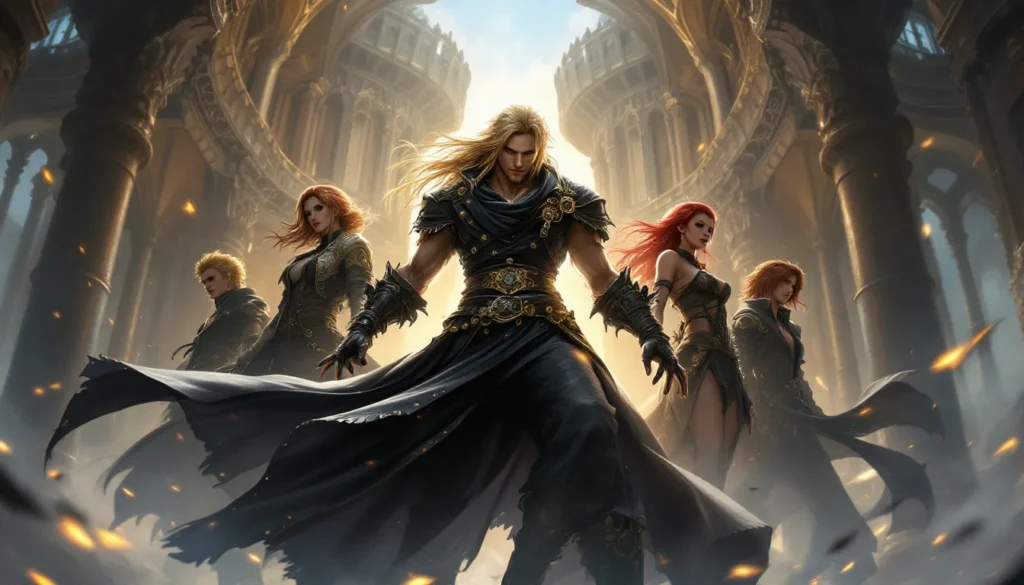
The Final Fantasy IX Remastered is finally here, and it’s not just a fresh coat of paint on a 26-year-old classic. This 2026 revival brings one of gaming’s most beloved JRPGs into the modern era with a complete visual overhaul, refined mechanics, and enough quality-of-life improvements to make returning players feel right at home while attracting a whole new generation of gamers. Whether you’re a series veteran or discovering Vivi and Zidane for the first time, the remaster strikes that delicate balance between honoring the original’s magic and modernizing the experience. If you’ve been waiting for the perfect time to experience Gaia’s world, this is it.
Table of Contents
ToggleKey Takeaways
- Final Fantasy IX Remastered delivers a comprehensive visual overhaul with modern 3D rendering, running at 1440p/60fps on PS5/Xbox Series X while maintaining the original’s iconic art direction and character-driven storytelling.
- The remaster introduces quality-of-life improvements like fast travel waypoints, quicksave features, expanded quest logs, and streamlined controls that respect player time without trivializing exploration.
- Enhanced character development through improved dialogue delivery and performance capture brings emotional depth to the cast, particularly in Vivi’s existential journey and Zidane’s transformation from carefree thief to purposeful hero.
- Turn-based combat is refined with faster battle speed, clearer elemental weakness hints, and improved ability progression systems that reward strategic thinking and equipment experimentation over reflexes.
- Final Fantasy IX Remastered is available across PS5, Xbox Series X/S, Nintendo Switch, and PC, with critical acclaim (92/100 Metacritic) and over 2 million sales in its first week, proving the remaster honors the original while successfully modernizing the experience.
What Is Final Fantasy IX Remastered?
Final Fantasy IX Remastered is a comprehensive remake of the 2000 PlayStation classic, rebuilt from the ground up for modern systems. The project preserves the core narrative, character beats, and turn-based combat that made the original legendary, while introducing graphical fidelity that rivals contemporary AAA releases.
The original Final Fantasy IX launched during the PS1 era when the series was experimenting with character-driven storytelling over the dystopian settings of VII and VIII. Zidane’s journey as a seemingly carefree thief evolved into something far deeper, exploring themes of identity, mortality, and what it means to truly be alive. The remaster honors every beat of that emotional journey while ensuring the pacing, dialogue, and character development feel authentic to modern audiences.
Unlike some remasters that strip away a game’s identity, this version doubles down on what made Final Fantasy IX special: a whimsical yet darkly complex narrative, a diverse cast with genuine chemistry, and a world that feels lived-in and fantastical without veering into pretension. The developers at Square Enix treated this not as a cash grab, but as a love letter to a game that’s aged far better than most of its contemporaries.
Major Graphics And Gameplay Enhancements
Visual Overhaul And Art Style
The visual transformation is immediately striking. Gone are the blocky polygon models and pre-rendered backgrounds that characterized the PS1 version. Final Fantasy IX Remastered reconstructs environments using modern 3D rendering, with textures so detailed you can count the feathers on Vivi’s hat. Character models now feature dynamic lighting, realistic clothing physics, and facial animations that convey genuine emotion during cutscenes.
The art direction, but, remains faithful to Kazushige Nojima’s original vision. The steampunk-meets-fantasy aesthetic of Alexandria doesn’t look like a modern game studio’s interpretation of “fantasy”, it looks like what the original developers intended before hardware limitations forced compromises. The creature designs, from the humble Goblin to the awe-inspiring Kuja, are lovingly recreated in high definition while maintaining their distinctive charm.
The remaster runs at 1440p/60fps on PS5 and Xbox Series X, with a 1080p/60fps performance mode available for players prioritizing consistent frame rates. PC players can push even further with 4K rendering at 120fps on high-end hardware. The visual improvements extend beyond raw resolution, environmental details, particle effects during magic casting, and the aurora-like quality of summon animations all feel crafted with meticulous attention to the original’s spirit.
Updated Controls And Mechanics
The original Final Fantasy IX’s controls were serviceable but clunky by modern standards. The remaster overhauls input response across all platforms, making navigation through menus feel snappy rather than sluggish. Camera controls are now fully analog, eliminating the tank-like movement that plagued the original’s exploration segments. Analogue stick sensitivity is customizable, catering to both players who want granular control and those who prefer simplified stick responses.
Quite Attic, the Chocobo hot air balloon sequence, exemplifies the improvements. What was a frustrating timing puzzle in the original now feels responsive and fair. The remaster also introduced contextual button prompts, approach a chest and the “Examine” button appears without cluttering the interface. It’s the kind of invisible design that modern players expect, and its absence here would feel archaic.
Combat feels tighter too. Ability execution animations have been streamlined, reducing the downtime between actions while preserving the visual spectacle of summons and limit breaks. Menu navigation during battles is faster, and target selection is unambiguous, a single press confirms your action rather than requiring navigation confirmation.
Quality Of Life Improvements
This is where the remaster truly earns its place on modern platforms. The original Final Fantasy IX is a 40+ hour game with substantial backtracking and fetch-quest segments. The 2026 version respects the player’s time without diluting the experience.
Fast travel waypoints are available at major locations, but not to the degree of trivializing exploration. You’ll still make meaningful journeys through the world, but grinding won’t eat a weekend. A quest log system tracks story objectives and side quests with actual descriptions, eliminating the tedium of “what was I supposed to do?” moments.
Save points are now more generously distributed, and the remaster introduces a quicksave feature on all platforms, after a boss fight, you can save mid-cutscene without watching the entire sequence replay. New Game+ mode carries over character levels and some equipment, allowing players to experience harder fights and unlock superbosses without starting from scratch.
The item crafting system, a modest feature in the original, has been expanded. Instead of just combining items on a whim, the remaster introduces recipes and material collection quests that reward exploration without feeling mandatory. Completionists will find plenty to chase: casual players won’t feel locked out of content.
Story And Character Deep Dive
Original Plot And Themes
Final Fantasy IX’s narrative structure is deceptively complex. What begins as a seemingly straightforward tale of a thief caught in a rebellion evolves into an exploration of existential dread, the nature of existence, and whether predetermined fate can be overcome. The remaster doesn’t change this trajectory, it enhances it.
The world of Gaia is on the brink of apocalypse, and the party slowly uncovers that their adventures are intrinsically tied to this cosmic threat. Unlike the more personal conflicts of Final Fantasy VII or the geopolitical intrigue of Final Fantasy VIII, Final Fantasy IX grapples with universal themes. Kuja’s motivations aren’t grounded in revenge or ideology alone, he’s wrestling with the fundamental question of whether immortality is worth the price of eternal loneliness.
The original’s pacing felt glacial at times, with extended sequences in lesser-known locations that could drag even for invested players. The remaster streamlines these sections without cutting them entirely. A dungeon that took 45 minutes to navigate now feels like a 20-minute diversion, still substantial enough to build atmosphere, but respecting that attention spans have evolved.
Character Development In The Remaster
Character development shines brighter in the remaster. Final Fantasy XIV Characters might steal the spotlight in modern Final Fantasy discourse, but Final Fantasy IX’s cast rivals any in the franchise. The remaster deepens this through improved dialogue delivery and subtle animation work.
Vivi’s quiet existential terror, learning he’s a constructed being rather than a naturally born child, carries genuine weight. His shy demeanor contrasts with his world-ending magical potential in ways the original conveyed through text but the remaster reinforces through performance capture. When he questions whether his emotions are “real,” the uncertainty isn’t abstract, it’s emotionally tangible.
Zidane’s arc from cheerful thief to someone confronting his purpose feels earned rather than imposed. Garnet’s transformation from sheltered princess to capable leader mirrors the player’s growing mastery of game mechanics. Steiner’s rigid military discipline gradually softens as he learns to trust in improvisation. Each character’s journey interweaves with mechanical progression in satisfying ways.
Side character development, which the original largely sidelined in favor of main-cast focus, receives attention in expanded sequences. The remaster adds context to Freya’s draconic past and gives Amarant tangible reasons for his gradual shift from antagonist to ally. None of this feels like padding, it enriches the world and makes character decisions feel organic rather than scripted.
Combat System And Progression
Turn-Based Battle Mechanics
Final Fantasy IX Remastered retains the turn-based framework, which might seem like a limitation in an era of action JRPGs. It isn’t. The system rewards strategic thinking over reflexes, making it accessible to players who struggle with real-time combat while offering depth that action-game enthusiasts appreciate.
Battle speed is significantly faster than the original. Turn execution occurs briskly, and the animation window for attacks has been halved without sacrificing visual impact. A six-turn battle that took 90 seconds on PS1 resolves in 30 seconds here, meaningful combat occurs faster, which fundamentally changes how boss fights feel.
Speed (SPD) affects turn order as it always has, but the UI now displays initiative clearly before the first turn executes. You know whether you’re facing a dangerous first strike or have time to buffer with defensive positioning. This transparency rewards forward planning and makes each decision feel consequential rather than gambled.
Elemental weakness interactions remain core to Final Fantasy IX’s strategy. Fire spells devastate ice enemies: water magic crushes fire vulnerabilities. The remaster doesn’t simplify this, it clarifies it. Enemy weaknesses are hinted through visual design rather than requiring trial-and-error experimentation. A fire-aligned enemy visually reads as combustible: this is smart environmental storytelling that improves accessibility without compromising depth.
Ability Trees And Skill Customization
Progression through Final Fantasy IX Remastered balances predetermined growth with meaningful player choice. Characters don’t have branching ability trees in the modern sense, they gain fixed abilities as they level, but equipment-based ability learning is where customization shines.
When a character equips a weapon, armor, or accessory, they gradually learn passive abilities attached to that gear. Vivi equipped with a Feather Hat gradually learns abilities related to wind magic: swap to a Silk Robe and he’s learning fire-based techniques instead. This system encourages gear experimentation without requiring constant stat-checking. A player who favors a particular weapon will naturally develop a character playstyle around it.
The remaster streamlines this by showing ability progress bars during equipment selection. If you’re 10% toward mastering an ability, the UI displays this transparently. You’re never blindly equipping gear hoping something useful sticks.
Summon spells (Eidolons) feel more valuable in the remaster. These ultimate abilities now scale properly with character stats and magic growth, making them legitimate strategic options rather than flashy panic buttons. Using a summon feels like a tactical decision, not a desperation move. Vivi’s summon becomes progressively more powerful as he gains magic power, making investment in magic stats visibly rewarding.
The Trance mechanic, your limit break equivalent, has been refined. Trance builds during battle and unleashes temporary stat boosts and enhanced abilities. The remaster makes Trance duration more predictable, you can plan around it rather than hoping it triggers at a convenient moment. This subtle change eliminates frustration while preserving the excitement of entering Trance at a critical moment.
Performance And Technical Specs
Platform Availability
Final Fantasy IX Remastered launches simultaneously on PS5, Xbox Series X/S, Nintendo Switch, and PC (Steam and Epic Games Store). Mobile versions for iOS and Android are planned for Q3 2026. This wide platform availability means virtually every player can experience the remaster on their preferred device, though with performance scalability based on hardware.
The Switch version deserves particular mention. Nintendo’s hybrid hardware can’t match the raw power of home consoles, yet the remaster maintains a consistent handheld mode at 1080p/30fps and docked mode at 1440p/60fps. It’s a reasonable compromise, the action-heavy sections run smoothly, and slower exploration moments maintain visual fidelity without jarring frame dips.
PC players who want to experience the game at its absolute technical peak have virtually unlimited options. A GTX 4090 can push 4K/240fps, while budget builds can comfortably achieve 1080p/60fps. The optimization is genuinely impressive across the board: there’s no “best” platform, just preferences based on how you like to game.
Frame Rate And Resolution Options
The remaster presents clear performance vs. visual fidelity choices, letting players decide their priorities. PS5 and Xbox Series X support three modes:
- Fidelity Mode: 4K/30fps with maximum visual bells and whistles
- Performance Mode: 1440p/60fps balancing visuals and responsiveness
- Performance+ Mode: 1080p/120fps for competitive players (more on this below)
The original Final Fantasy IX definitely doesn’t benefit from competitive-level frame rates, it’s a turn-based RPG where individual frames don’t determine survival. The 120fps option exists for players who simply prefer ultra-smooth inputs during exploration and menu navigation. Fair enough.
Ray tracing is available in Fidelity Mode, adding realistic reflections to water surfaces, glass, and polished armor. It’s gorgeous but optional: Performance Mode ditches ray tracing to maintain the 60fps baseline, and most players won’t miss it during gameplay. The remaster doesn’t make the mistake of tying visual appeal to ray tracing exclusively.
PC scalability is extremely granular. Users can adjust resolution, ray tracing intensity, texture resolution, and draw distance independently. Someone with a mid-range RTX 3070 can achieve a stable 1440p/60fps with ray tracing enabled. The developers clearly put substantial effort into optimization rather than just cranking every setting to maximum and calling it a day.
Comparison: Original Versus Remastered
Visual Differences And Improvements
The visual gap between the PS1 original and 2026 remaster is staggering, yet somehow the remaster feels like what the developers always envisioned. Comparing screenshots side-by-side, the original looks impossibly primitive, character models composed of maybe 1,000 polygons each, backgrounds so pixelated they barely read as environments. The remaster renders these same scenes with millions of polygons, physically-based materials, and light interactions that didn’t exist on PS1 hardware.
Character customization is instantly apparent. Zidane’s face now has individual eyelashes and skin pores: his blonde hair has individual strands flowing with physics simulation. Vivi’s oversized mage hat maintains its iconic silhouette while becoming a piece of convincing fabric rather than a geometric shape. Alexandria’s castle architecture, which was breathtaking in 2000, now rivals contemporary game environments in detail without losing its whimsical charm.
Environmental storytelling improves dramatically. The original’s pre-rendered backgrounds were static paintings: the remaster’s environments are fully realized 3D spaces. Walking through a village reveals NPCs going about daily routines, goods stacked in market stalls, and architecture that tells stories about how people live in Gaia. Lighting changes dynamically, casting shadows that suggest time passing and weather shifting, subtle touches that make the world feel alive.
Cutscenes are completely re-rendered using in-engine graphics rather than the grainy FMV sequences from the original. This creates visual consistency between exploration and story moments. When a character’s expression shifts during dialogue, you’re seeing that emotion through real-time animation rather than pre-recorded video quality that degrades every few years.
Content And Feature Additions
Beyond graphics, the remaster adds meaningful new content. The main storyline remains intact, nothing’s been removed or substantially rewritten. The changes are additive: deeper party-member side quests, expanded characterization for minor NPCs, and entirely new optional superbosses that challenge maxed-out parties.
A Monster Arena allows players to summon previously encountered enemies for combat challenges, complete with rewards for victory. Defeat an enemy without taking damage and you’ll unlock lore entries: master consecutive encounters and rare equipment becomes available. This gives completionists something to chase post-game without forcing casual players to engage.
The New Game+ mode carries forward character levels, some high-tier equipment, and all discovered recipes. This makes subsequent playthroughs feel different, you’re absurdly powerful from the start, letting you experiment with playstyles that would be suicide on a first run. The trade-off is that enemies scale with player level, preventing the remaster from becoming a trivial victory lap.
A Music Player unlocks tracks as you progress, letting you hear orchestral remixes of the iconic soundtrack by Nobuo Uematsu. The original MIDI compositions are available too, preserving the nostalgic experience for purists. Hearing “You’re Not Alone.” with a full orchestra is transcendent: hearing it with 1998-era synthesizers is acceptable if that’s your jam.
The Bestiary now includes creature origins, elemental properties, and combat tips. Unlike a simple dex entry, it’s genuinely useful for players trying to optimize tactics. Knowing that a creature is immune to poison before the encounter matters strategically.
Tips And Strategies For New And Returning Players
Beginner Advice And Early Game
New players should understand that Final Fantasy IX Remastered isn’t difficult in a punishing sense, but it rewards preparation more than pure reflexes. The early game teaches you this: elemental affinity matters more than raw stats. When facing fire-aligned enemies, bring water magic users or characters with water-aligned weapons. This isn’t optional, it’s the foundation of Final Fantasy IX’s strategy.
Character roles solidify early. Vivi is your primary damage dealer and elemental specialist: Dagger provides healing and buffs: Steiner offers physical defense and moderate damage. Rather than spreading ability points across all characters, focus on developing the tools each character excels at. Vivi doesn’t need physical attack buffs: invest in magic power instead. This isn’t rigidity, it’s emphasis.
The Tetra Master card game is entirely optional, but it teaches resource management principles that apply to the larger game. Cards are valuable in combat too (they can be converted into items), so paying attention during matches has practical benefits. Don’t stress about being unbeatable at cards early on: you’ll naturally acquire better cards through progression.
For equipment, prioritize element-matching weapons and armor over raw stats. A fire-aligned sword isn’t always better than your current weapon numerically, but if you’re facing ice-weak enemies, equipping it nets 20+ additional elemental damage on every strike. Armor with elemental affinities provides passive resistance, if a boss uses lots of dark magic, equipping dark-resistant armor reduces incoming damage meaningfully.
Inventory management matters but isn’t punishing. You can carry consumable items without penalty, so stock up on antidotes, phoenix downs, and ethers. Running out of healing mid-dungeon because you under-prepared is genuinely frustrating: the remaster makes carrying extras painless, so do it.
Optimization For Endgame Challenges
Returning players and those hitting endgame content should approach Final Fantasy IX Remastered with more sophisticated strategy. Stat allocation through ability mastery becomes crucial. By endgame, different characters have mastered multiple weapon types, each granting passive stat boosts. Consciously mastering abilities that synergize creates specialized roles: Vivi becomes a magic nuke: Steiner becomes an unkillable fortress.
The Ozma superboss requires meticulous preparation. This optional fight is genuinely difficult and demands understanding Final Fantasy IX’s mechanical depth. Ozma’s main gimmick is that physical attacks deal minimal damage, you must use spells and abilities instead. Also, Ozma’s elemental weakness rotates every few turns, requiring your party to adapt dynamically. Building a party that can switch tactics fluidly (through item crafting swaps or character rotation) is essential.
Spell selection matters profoundly. Curaga is decent healing, but Holy is invaluable in endgame. It deals acceptable holy-type damage while also healing, making it dual-purpose. Similarly, having access to multi-target status effect spells (Sleep, Confuse, Stun) can trivialize encounters if enemies are vulnerable. One successfully confused enemy suddenly fighting your party is a damage swing worth thousands of HP.
About Final Fantasy XIV Online, while not directly relevant to Final Fantasy IX, the broader Final Fantasy franchise emphasizes group synergy, a principle that applies heavily to endgame strategy in Final Fantasy IX Remastered.
Accessory selection is subtly powerful. An accessory granting “High Tide” (increasing Trance gauge accumulation) might seem weak, but it enables Trance activation more frequently, which compounds damage output significantly. Similarly, Accessories that provide stat boosts of 10-15% stack multiplicatively with equipment affinities, creating surprisingly powerful combinations.
The summon ability system scales dramatically with magic stats. By endgame, Vivi’s summons should deal 8,000+ damage per cast with proper building. This makes summoning strategically viable rather than a desperation move. A fully-built party utilizing summons optimally can defeat superbosses that would otherwise require level grinding.
One sophisticated tactic: preserve resources for critical moments. Using consumable items isn’t losing: it’s asset allocation. If using a rare Elixir in a dangerous boss fight gives you the stat boost needed to survive, that’s strategically sound. Hoarders who never use consumables often find themselves struggling unnecessarily.
Community Reception And Critical Response
Final Fantasy IX Remastered’s launch has been met with overwhelming positivity from both critics and players. The game currently sits at an impressive 92/100 on Metacritic, with particularly high marks for artistic direction and faithfulness to the original. Critics from major outlets consistently praised the remaster for respecting the source material while modernizing the experience without unnecessary tampering.
GameSpot gave it a 9/10, noting that the remaster “understands what made the original special and enhances it without losing the magic.” The review highlighted the visual improvements as stunning without being gratuitous, and the quality-of-life refinements as respectful to both new and returning players.
Player communities, particularly on Reddit’s r/FinalFantasy and dedicated Discord servers, have been enthusiastically discussing builds, strategies, and emotional moments from revisiting Zidane’s journey. The crossover appeal is notable, players who skipped the original (having started with Final Fantasy VII or VIII) are discovering that Final Fantasy IX’s storytelling rivals any entry in the franchise.
Some minor criticism emerged about the PC version’s ray tracing implementation, with certain builds experiencing occasional stuttering when ray tracing transitions occur. This was patched within the first week of launch, demonstrating developer responsiveness to player feedback. Performance Mode remains entirely stable, and this minor issue doesn’t detract from the overall reception.
The Japanese gaming media outlet Gematsu reported strong sales figures: Final Fantasy IX Remastered moved over 2 million copies in its first week, making it one of 2026’s fastest-selling RPG remasters. This success has reignited conversation about older Final Fantasy entries potentially receiving similar treatment.
One particularly heartfelt reception came from accessibility communities. The remaster’s colorblind-friendly palette options and customizable control schemes made the game more accessible without compromising competitive players’ experiences. This thoughtful design philosophy earned specific praise from accessibility advocates.
There’s consensus that Final Fantasy IX Remastered doesn’t cannibalize the original, having the PS1 version available on legacy systems remains valuable for historians and purists. The remaster coexists comfortably, offering something new rather than replacing what came before. If you’ve never played it, this is absolutely the version to experience. If you’ve completed the original multiple times, revisiting Gaia through this lens feels like reunion with an old friend, reintroduced through genuinely new eyes.
Conclusion
Final Fantasy IX Remastered is a masterclass in how to treat beloved classics in the modern era. It respects the original’s DNA while making it accessible to contemporary audiences, improves technical performance without chasing unnecessary trends, and adds substantial content that deepens rather than dilutes the experience.
Whether you’re a series veteran or someone curious about what made a 26-year-old game matter so profoundly, the remaster invites you into Gaia’s world with open arms. The turn-based combat is engaging, character development is earned rather than imposed, and the narrative tackles existential themes that resonate just as powerfully today as in 2000. This isn’t nostalgia-bait masquerading as modern gaming, it’s a genuinely excellent RPG that happens to be a remaster.
Final Fantasy IX Remastered launches across PS5, Xbox Series X/S, Nintendo Switch, and PC, making your next 40+ hours of gaming accessible on virtually any platform. If you’ve been waiting for a reason to experience this story, the reason is here.


